
Indoor air quality plays a bigger role in home comfort than many homeowners realize. While heating and cooling systems keep indoor temperatures comfortable, the HVAC filter works behind the scenes to trap dust, pollen, pet dander, and other airborne particles before they circulate throughout your home. Choosing the wrong filter can restrict HVAC airflow, increase energy bills, reduce HVAC efficiency, and even shorten the lifespan of your heating and cooling system.
Understanding the MERV Rating Chart makes selecting the right filter much easier. Instead of buying the highest-rated filter available, homeowners should choose one that balances filtration performance with proper airflow for their specific HVAC system.
This guide explains what MERV ratings mean, how they affect indoor air quality, and how to choose the best HVAC filter based on your home’s needs, family health, and HVAC compatibility.
What Is a MERV Rating?
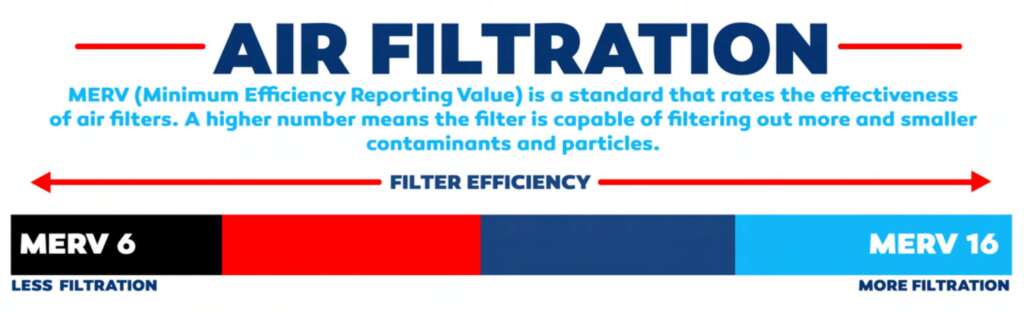
MERV stands for Minimum Efficiency Reporting Value. It is the standard rating system developed by the American Society of Heating, Refrigerating and Air-Conditioning Engineers (ASHRAE) to measure how efficiently an HVAC filter captures airborne particles.
The higher the MERV rating, the smaller the particles the filter can trap. However, a higher rating also creates more airflow resistance, making it important to choose a filter that matches your HVAC system’s specifications.
Why MERV Ratings Matter
Choosing the right HVAC filter rating offers several benefits:
- Improves indoor air quality
- Captures dust, pollen, and pet dander
- Protects HVAC components from debris
- Improves HVAC energy efficiency
- Helps lower energy costs
- Extends equipment lifespan
A properly selected filter protects both your family’s health and your HVAC investment.
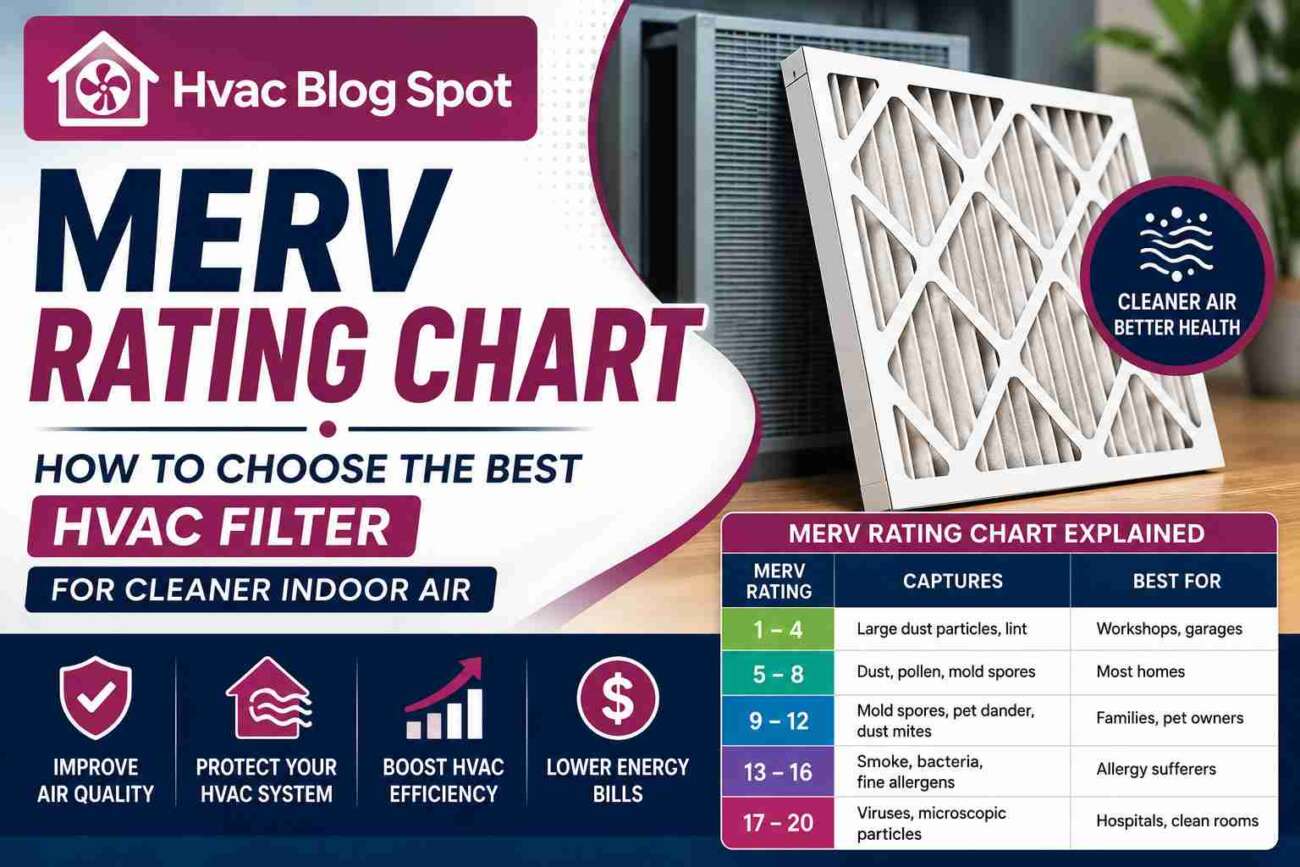
MERV Rating Chart Explained
The following MERV filter chart provides a quick comparison of common filter ratings and their recommended applications.
| MERV Rating | Filter Type | Captures | Best For |
| 1–4 | Basic | Large dust particles | Workshops and garages |
| 5–8 | Standard | Dust, pollen | Most homes |
| 9–12 | Better | Mold spores, pet dander | Families and pet owners |
| 13–16 | Premium | Smoke, bacteria | Allergy sufferers |
| 17–20 | HEPA-Level | Viruses and microscopic particles | Hospitals and clean rooms |
For most residential HVAC systems, MERV 8 to MERV 13 offers the best balance between filtration and airflow.
What Does Each MERV Rating Capture?
Not every home requires the same level of air filtration. Understanding each filter category helps homeowners make the right decision.
MERV 1–4
These filters capture large particles like dust, lint, and carpet fibers.
Best for:
- Garages
- Workshops
- Storage buildings
Although inexpensive, they provide minimal improvement in indoor air quality.
MERV 5–8
This is the most common home air filter used in residential HVAC systems.
These filters effectively capture:
- Household dust
- Pollen
- Mold spores
- Dust mites
They provide excellent airflow while protecting HVAC equipment, making MERV 8 one of the most popular choices for homeowners.
MERV 9–12
These filters capture smaller airborne contaminants, including:
- Pet dander
- Fine dust
- Mold spores
- Vehicle emissions
Homes with pets, children, or mild allergies often benefit from MERV 11 filters because they improve air quality without significantly reducing airflow.
MERV 13–16
Premium filters remove:
- Smoke particles
- Bacteria
- Fine allergens
- Microscopic dust
These filters are ideal for households with allergy sufferers or individuals with respiratory concerns. However, homeowners should confirm that their HVAC system can support a MERV 13 filter before installation.
MERV 17–20
These are medical-grade filters commonly used in:
- Hospitals
- Laboratories
- Pharmaceutical facilities
Although they provide exceptional filtration, they are generally not recommended for standard residential HVAC systems due to their high airflow resistance.
Which MERV Rating Is Best for Your Home?
The ideal MERV rating depends on your home’s environment and your family’s needs.
Apartments and Small Homes
A MERV 8 filter usually provides excellent airflow while capturing everyday household dust and pollen.
Homes with Pets
Pet hair and dander can quickly circulate through a home’s ventilation system. A MERV 11 filter offers improved filtration without placing excessive strain on most residential HVAC systems.
Allergy or Asthma Sufferers
Families affected by allergies often benefit from MERV 13 filters because they capture smaller allergens and airborne particles that lower-rated filters may miss.
Homes Near Busy Roads
Dust, smoke, and outdoor pollutants can enter through ventilation systems. A MERV 11 or MERV 13 filter can help improve indoor air quality by trapping more fine particles.
MERV 8 vs MERV 11 vs MERV 13
Choosing between these three filter ratings is one of the most common questions homeowners ask. Each option offers a different balance of filtration, airflow, and HVAC compatibility.
| Feature | MERV 8 | MERV 11 | MERV 13 |
| Airflow | Excellent | Very Good | Good |
| Dust Removal | Good | Better | Excellent |
| Allergens | Basic protection | Good protection | Best protection |
| Cost | Low | Moderate | Higher |
| HVAC Compatibility | Most systems | Most modern systems | Check manufacturer recommendations |
For most homes, MERV 8 provides reliable everyday filtration. If your household includes pets or allergy sufferers, MERV 11 or MERV 13 may be a better investment, provided your HVAC system is designed to handle the increased airflow resistance.
MERV vs HEPA Filters
Many homeowners confuse MERV and HEPA filters, but they serve different purposes.
A HEPA filter captures at least 99.97% of particles as small as 0.3 microns, making it ideal for hospitals, laboratories, and specialized clean environments. Most residential HVAC systems, however, are not designed to use true HEPA filters because they significantly restrict airflow.
A MERV 13 filter offers excellent filtration for most homes while maintaining the airflow needed for efficient HVAC performance. Unless your system is specifically designed for HEPA filtration, a high-quality MERV 11 or MERV 13 filter is usually the better choice.
How to Choose the Right HVAC Filter
Before purchasing a new HVAC air filter, consider these factors:
- HVAC System: Always check your owner’s manual for the recommended MERV rating.
- Family Health: Homes with allergies or asthma may benefit from higher-rated filters.
- Pets: Choose a filter that captures pet hair and dander effectively.
- Budget: Higher-rated filters cost more but may improve air quality.
- Local Air Quality: Homes in dusty or high-pollution areas often benefit from better filtration.
- Climate: Seasonal pollen and wildfire smoke may require a higher MERV rating during certain times of the year.
Selecting the right HVAC filter is about balancing clean air with proper system performance.
How Often Should You Replace an HVAC Filter?
Replacing your filter on time keeps your HVAC system running efficiently and helps maintain healthy indoor air.
| Home Type | Recommended Replacement |
| Standard household | Every 90 days |
| Home with pets | Every 60 days |
| Allergy sufferers | Every 30–45 days |
| Smokers in the home | Every 30–45 days |
| Vacation or seasonal homes | Every 6–12 months (or before occupancy) |
Regular HVAC filter replacement improves airflow, reduces dust buildup, and helps extend the life of your heating and cooling equipment.
Benefits of Choosing the Right MERV Rating
Selecting the correct MERV rating offers more than just cleaner air.
Benefits include:
- Improved indoor air quality
- Better HVAC efficiency
- Lower monthly energy bills
- Longer HVAC system lifespan
- Reduced dust accumulation
- Improved protection against pollen and pet dander
- Cleaner living environment for the entire family
The best filter is one that meets your indoor air quality needs without restricting airflow beyond what your HVAC system can handle.
Frequently Asked Questions
What MERV rating is best for most homes?
For most households, MERV 8 to MERV 11 provides an excellent balance between filtration and airflow. Homes with allergy sufferers may benefit from MERV 13 if the HVAC system supports it.
Is MERV 13 too restrictive?
Not necessarily. Many modern residential HVAC systems are designed to handle MERV 13 filters. Always follow the manufacturer’s recommendations before upgrading.
Does a higher MERV rating always mean a better filter?
A higher rating captures smaller particles, but it also increases airflow resistance. The best filter is the one recommended for your HVAC system and household needs.
Can MERV filters help reduce allergies?
Yes. Higher-rated filters, especially MERV 11 and MERV 13, can capture more allergens such as pollen, mold spores, and pet dander, helping improve indoor air quality.
Can the wrong HVAC filter damage my system?
Yes. A filter with an excessively high MERV rating can restrict airflow in systems not designed for it, leading to reduced efficiency and unnecessary strain on HVAC components.
Final Thoughts
Understanding the MERV Rating Chart helps homeowners choose an HVAC filter that improves indoor air quality without compromising system performance. Instead of automatically selecting the highest-rated filter, focus on finding the right balance between filtration, airflow, and your HVAC manufacturer’s recommendations.
Whether your goal is reducing allergens, protecting your HVAC equipment, or creating a healthier indoor environment, choosing the right filter is a simple upgrade that can make a noticeable difference in comfort and efficiency.
Regular filter inspections and timely replacements are just as important as selecting the correct MERV rating. By making informed choices, homeowners can enjoy cleaner air, lower energy costs, and a longer-lasting HVAC system.
Explore More HVAC Tips
Looking for more expert HVAC guides, maintenance tips, and indoor air quality advice? Visit HVAC Blog Spot to explore the latest articles on heating, cooling, ventilation, and energy-efficient home comfort solutions.

Leave a Comment